

Canadian trucking industry trends 2026 reflect a market shaped by steady freight demand, infrastructure investment, rising costs, and a growing focus on reliability and load protection. Freight activities will remain strong across major sectors such as construction, steel, lumber, and heavy-haul. This strength will be driven by both domestic and international trade. Simultaneously, government investment in infrastructure such as highway upgrades, bridge maintenance, and port expansions continues to emphasize trucking’s critical role in Canadian logistics. These macro trends reinforce the industry’s central role in keeping supply chains moving, even as costs and compliance requirements rise.
The year 2025 tested that resilience. Political pressures and uncertainty surrounding tariffs on U.S.–Canada steel transportation created volatility across cross-border freight flows, while rising operating costs compressed already-thin margins. Profitability remained a challenge for much of the industry, particularly for owner-operators and smaller fleets. Yet despite these headwinds, both independent operators and major fleets adapted by tightening operations, reassessing routes and loads, and investing selectively in equipment that could reduce downtime and improve long-term efficiency.
Building on the actions we outlined in last year’s 2025 plan, Verduyn continues to focus on operational improvements, proactive equipment solutions, and strategic investments to help our customers stay on the road. The initiatives highlighted in that plan—enhancing service, improving uptime, and strengthening support for Canadian fleets—proved critical in navigating the challenges of 2025 and directly informing our approach heading into 2026.
Even amid fluctuating fuel expenses, increasing insurance rates, and a shortage of workers, Canadian fleets have managed to remain remarkably resilient. The industry’s ability to adapt through operational efficiencies, smarter procurement, and investment in durable equipment has kept trucks on the road and loads delivered on time. This resilience is no accident. It reflects a pragmatic mindset among fleet managers and owner-operators who see reliability as the real measure of competitiveness.
In 2026, reliability is now the key differentiator. Tighter margins and costly downtime make fleets prioritize equipment that performs consistently in tough conditions. Tarp systems have shifted from accessories to essential components of operational planning. A tarp that fails in harsh conditions or demands constant repairs can lead to delays and missed deliveries. In this industry, delays translate directly into avoidable costs. Durable equipment ensures uptime, giving fleets a clear advantage in meeting customer demands while keeping expenses in check.
Looking ahead to 2026, Canadian trucking is poised to keep growing. The real test, however, will be whether operators make practical calls that put reliability, compliance, and resilience first—lessons reinforced by the challenges of 2025 and the evolving realities of today’s freight economy.
Weather and Climate Realities Affecting Tarp Performance
Canadian trucking faces some of the harshest weather conditions in the world, making tarp systems a frontline defense for fleets. Extreme cold, heavy snow, and freeze‑thaw cycles put immense stress on equipment, and materials that work in milder climates often fail under Canada’s realities. For steel, lumber, and construction haulers, durability is not optional—it directly impacts uptime, load protection, and profitability. A tarp that stiffens or tears in winter can delay deliveries and force costly repairs, while reinforced seams, cold‑resistant fabrics, and reliable tensioning mechanisms ensure cargo stays secure. Real‑world examples highlight the stakes: Ontario steel haulers rely on moisture‑resistant tarps, B.C. lumber carriers need gear that withstands rain and sudden freezes, and Alberta construction fleets demand stability against high winds and blowing snow.
At the same time, rising operational costs: fuel volatility, climbing insurance premiums, and maintenance pressures are sharpening the need for longer‑lasting equipment. Short‑term savings on cheaper gear often vanish when downtime and replacements pile up. Fleets are increasingly looking beyond upfront costs and instead focusing on the overall value of their equipment. Durability, ease of repair, and dependable services are becoming top priorities. A tarp that holds up for several extra seasons can mean thousands saved by avoiding costly downtime. In 2026, Canadian carriers that invest in resilience and reliability will be the ones ready to succeed in a tough market.
Fleet Standardization and Reduced Downtime Strategies
As 2026 approaches, Canadian carriers are finding that standardization is one of the smartest ways to keep expenses in check while boosting reliability. In trucking, every hour of downtime cuts into profits, so having consistent equipment across the fleet pays off. Standardization trims unnecessary complexity, makes training more straightforward, and allows both drivers and mechanics to work with systems they already know. When all trucks rely on the same tarp set-up or fastening method, repairs can be handled more quickly, spare parts are easier to keep on hand, and operators spend less time chasing down problems.
Decreased downtime is not just convenient; it also means operational resilience. One truck with a truck failure can disrupt schedules, which could lead to strain in customer relationships. Standardized equipment and durable equipment minimize risks and create predictable operating environments. Standardized equipment also makes it easier to meet safety standards across provinces.
For heavy haul, steel, lumber, and construction carriers, standardization ensures every piece of equipment can withstand harsh conditions while simplifying procurement decisions and focusing managers on long-term ROI.
Simultaneously, buying behavior is changing. The traditional focus on upfront costs is now shiftingw toward strategies centered on ROI and longevity. Higher costs and tough Canadian weather prove that quick, low-cost fixes usually end up being more expensive later.
Decision makers now prioritize durability, repairability, and service access. By 2026, fleets that view equipment as investments in resilience, rather than expenses to minimize, will be best positioned to thrive. Longevity, not lowest price, is becoming the benchmark.
Where Verduyn Tarps is Focused in the Canadian Market
Built for Canada’s Toughest Industries
Verduyn Tarps continues to concentrate on the sectors where durability and reliability are most critical. Heavy-haul, steel, lumber, and construction carriers form the backbone of Canada’s freight economy, operating in some of the harshest conditions in the country. Heavy loads, long hauls, and extreme weather—from icy prairie winds to relentless coastal rain—push equipment to its limits every day.
That reality drives how we design our tarp systems. Verduyn solutions are built to perform under pressure, helping fleets protect cargo, reduce downtime, and maintain compliance without sacrificing reliability.
Designed for Longevity and Uptime
Our approach emphasizes materials and manufacturing methods proven to last. Reinforced fabrics, cold-resistant coatings, and repairable components are foundational to Verduyn’s product line, reflecting our deep understanding of Canadian climates and operating demands.
By prioritizing service access and repairability, we help carriers extend equipment life and avoid costly disruptions. This hands-on focus on durability and uptime aligns with the evolving priorities of Canadian fleets that value long-term ROI over short-term savings.
A True Partner to Fleets and Owner-Operators
Verduyn’s role extends beyond supplying equipment. We work closely with fleet managers and owner-operators to understand day-to-day challenges and develop tarping solutions that support broader goals for safety, efficiency, and productivity.
This collaborative approach allows us to deliver solutions that work in real-world conditions, positioning Verduyn as a long-term partner invested in our customers’ success.
40 Years Strong, with an Eye on the Future
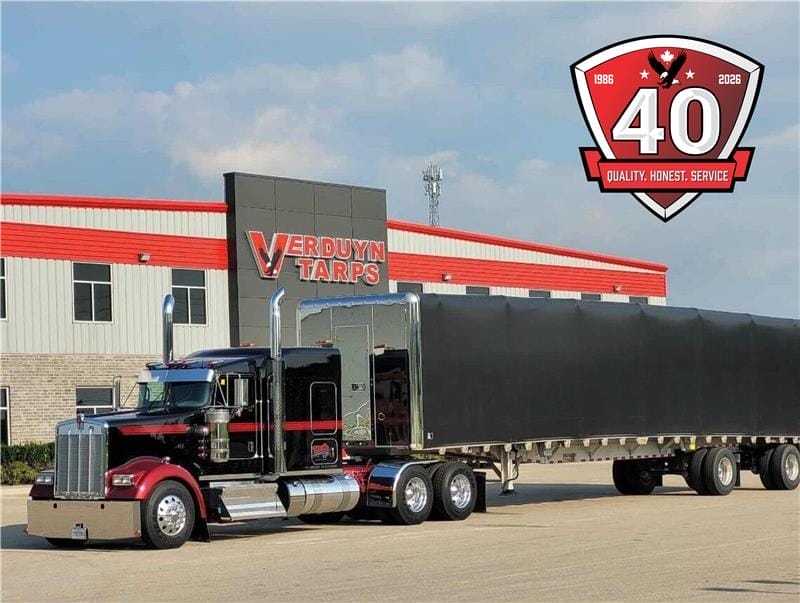
As we head into 2026, Verduyn proudly celebrates 40 years in business—a milestone that reflects decades of trust built with Canadian carriers. This anniversary also marks a significant transition for our family-owned and operated company. An official announcement is forthcoming regarding the passing of the torch to our next-generation COO, reinforcing our commitment to continuity, leadership, and innovation for years to come.
Expanding Solutions Across New Markets
Innovation continues to drive Verduyn forward. Our Eagle Tarp retractable tarping system is expanding into new applications beyond traditional transportation, including specialty car hauling. At the same time, we are officially launching our complete open-top tarping solutions tailored for the construction, agriculture, and refuse and recycling markets.
These advancements reflect our ongoing diversification and our focus on supporting drivers and trailer owners across a growing range of industries.
Smarter Systems, Better Service
In 2026, Verduyn is launching a new ERP system designed to streamline internal processes and strengthen collaboration across departments. By improving communication, accuracy, and visibility throughout our operations, this investment enables faster response times, improved order management, and a more consistent customer experience—delivering real, behind-the-scenes value to our customers.
Innovation Without Compromise
Verduyn remains focused on creating solutions through innovative design, strategic parts procurement, and efficient manufacturing methods that reduce cost pressures without compromising the quality and durability we are known for. We continue to collaborate on custom projects that challenge standard approaches and deliver results that keep our customers moving. These partnerships fuel innovation while ensuring practical, real-world performance.
Connecting Coast to Coast
Building strong relationships remains central to our strategy. We are strengthening partnerships with existing dealer partners from coast to coast while continuing conversations that lead to new connections. This expanding network ensures Verduyn solutions are accessible to fleets, operators, and industries across Canada—today and into the future.
Engaging the Industry in 2026
Verduyn will remain active within the industry through key tradeshows in 2026. We are proud to participate in LO Congress by Landscape Ontario, a premier event for construction, landscaping, and infrastructure professionals, where attendees can explore practical tarping solutions for demanding job-site environments. Free entry is available using show code VERD2357.
In April 2026, Verduyn will also exhibit at Truck World, Canada’s largest trucking industry tradeshow. This national platform allows us to showcase our latest tarping systems, cargo securement solutions, and fleet-focused innovations. Complimentary admission is available using our exclusive code VERDUYN.
Additionally, we will participate in the APNA Truck Show in Abbotsford, British Columbia, taking place June 13–14, 2026 at the Tradex Centre. The APNA Truck Show is one of Western Canada’s most anticipated trucking industry events, featuring exhibits, job fairs, show-and-shine displays, seminars, and networking opportunities for professionals across the transportation sector.
Our presence at APNA reflects our commitment to strengthening relationships on the West Coast, deepening engagement with regional fleets and owner-operators, and anticipating new opportunities in one of Canada’s most active transportation corridors.
Looking Ahead
Heading into 2026, Verduyn’s commitment remains clear: supporting Canadian carriers with equipment that withstands harsh conditions, reduces downtime, and delivers measurable ROI. Backed by four decades of experience and a forward-looking mindset, we remain focused on practical innovation, strong partnerships, and helping our customers succeed in a demanding and ever-changing market.
What Canadian Fleets Should Be Thinking About Now
Proactivity is the way to go in 2026. The continuing rising costs, ever-changing regulatory demands, and harsh weather make reliability and durability central to operational success. Managers need to be asking tough, practical questions: Can our equipment hold up in extreme cold? How much downtime are repairs costing us? Are our tarp systems built for easy servicing and long-term reliability? These are not just compliance checks. They go straight to the heart of profitability and customer confidence.
Standardization is becoming a key focus. When tarp systems are consistent across a fleet, operations run more smoothly, repairs are quicker, training is simpler, and operators work with equipment that they already know. Procurement choices need to look beyond the sticker price and weigh the total cost of ownership. A tarp that holds up longer and cuts downtime is not just a purchase, it is a smart investment in resilience.
By thinking strategically now, Canadian fleets can position themselves to thrive in 2026, ensuring durability, compliance, and uptime remain at the core of their operations.
As 2026 comes in, Canadian trucking will be shaped by a focus on resilience, durability, and long-term value. Rising expenses, tough weather, and shifting compliance standards have made equipment reliability a cornerstone of success. Tarp systems, once considered secondary, are now recognized as strategic assets, directly influencing uptime, safety, and profitability. Fleets and owner-operators that emphasize longevity, repairability, and total cost of ownership will be best prepared to excel in a demanding market.
Verduyn Tarps continues to stand behind Canadian carriers with solutions built for extreme conditions and consistent performance. With a practical, steady approach, we at Verduyn, position ourselves as a trusted partner, helping fleets make smart, future-ready choices that safeguard cargo, cut downtime, and sustain profitability well into the years ahead.

