

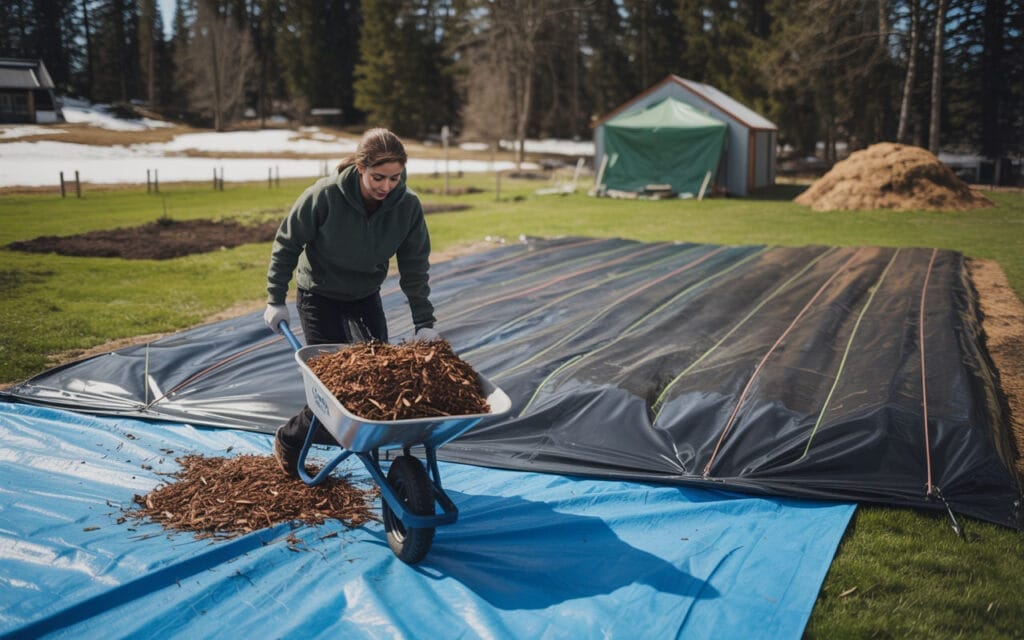
Tarp uses for spring are endless in Canada’s transitional season—melting snow, budding gardens, and unpredictable weather. During this time, tarps become incredibly handy not just in the garden but across a range of outdoor activities and home projects. Here’s how Canadians are putting them to work:
In the Garden
Weed Control & Soil Prep
Occultation, a simple yet powerful gardening method, involves laying opaque tarps—typically black plastic or silage tarps—directly over soil to block sunlight. Deprived of light and warmth, weed seeds fail to germinate or quickly die off, reducing the need for chemical weed control or labor-intensive removal.
At the same time, the trapped warmth beneath the tarp accelerates soil warming, which is especially beneficial in cooler climates where spring planting can otherwise be delayed.
After a few weeks, the tarp is removed to reveal a patch of clean, pre-warmed, and biologically active soil—ready for direct sowing or transplanting with minimal disruption to the soil structure.
It’s a low-tech, high-reward strategy that’s increasingly favored in both backyard gardens and small-scale farms.
Compost Management
Spring showers may bring flowers, but for compost piles, too much moisture can be a messy setback. Covering a compost pile with a tarp during the rainy season helps regulate its internal moisture—an essential element for healthy decomposition.
When a compost pile becomes waterlogged, oxygen pockets disappear, and decomposition slows down or turns anaerobic, resulting in foul smells and less nutrient-rich compost. By keeping excessive rain out, a tarp maintains the ideal dampness—moist like a wrung-out sponge—allowing beneficial microbes, fungi, and insects to continue breaking down organic matter efficiently.
Aside from moisture control, a tarp also traps warmth—another key ingredient for faster composting. As microbes work, they generate heat, especially in the pile’s center. A well-fitted tarp helps insulate this heat, allowing temperatures to stay high enough to accelerate microbial activity and kill off weed seeds or pathogens. This is especially useful during cool spring nights or in Canada’s variable climate. Some gardeners even use dark-colored or insulated tarps to enhance this greenhouse-like effect.
A tarp can serve as a barrier against wind that might blow away light materials like dried leaves or straw, helping the pile maintain its structure and ingredient balance.
Transporting Materials: Smart Tarp Uses for Spring Cleanup
Using a tarp to haul garden materials like mulch, soil, or yard waste is a simple, effective time-saver. Instead of filling and emptying wheelbarrows or making multiple trips, you can pile everything onto a sturdy tarp, grab the corners, and drag it to your destination.
This method is especially useful on uneven or soft ground where wheels might sink or get stuck. It minimizes lifting, reduces mess, and lets you move large amounts at once.
Tarps are also lightweight and easy to fold up afterward, making them a convenient tool for spring cleanups.
Whether you’re spreading mulch around flower beds or gathering pruned branches, a tarp turns heavy lifting into a quick pull—saving both your back and your energy.
Home Improvement and Maintenance
Paint and Stain Protection
During spring renovations, tarps are a must-have for shielding indoor and outdoor surfaces from paint splatters, dust, and debris. Spread over floors, decks, or furniture, they create a protective barrier that prevents permanent stains or scratches from tools and materials.
Whether you’re sanding, painting, or sawing, tarps help contain the mess and make cleanup a breeze.
They’re also great for covering items in storage or shielding delicate furniture from unexpected spring showers when working outside.
Gutter Cleaning
Laying a tarp beneath your ladder is a smart, hassle-free way to manage mess during spring chores like gutter cleaning or roof repair. As leaves, dirt, or old caulking tumble down, the tarp catches it all, saving your lawn or patio from scattered debris.
Once you’re done, cleanup is as easy as folding up the tarp and disposing of the waste—no tedious sweeping required.
It also protects delicate surfaces like grass or decking from scratches or stains caused by falling tools or materials.
Lightweight and reusable, a tarp turns a messy task into a neat, efficient job with minimal fuss.
Roof or Shed Repairs
Spring repairs often means a race against the rain, and a tarp can be a helpful friend. When working on roofs or sheds, temporary tarp covers act as protective shields, keeping exposed structures dry during unexpected spring showers.
By securing a heavy-duty, waterproof tarp over open areas, you prevent water from seeping into insulation, wood, or stored items—avoiding damage and costly setbacks.
It buys you time to complete repairs safely and thoroughly, especially when the weather won’t cooperate.
Easy to install with ropes or bungee cords, tarps are a practical, affordable solution for managing leaks and keeping your worksite weather-ready.
Outdoor Adventures: Tarp Uses for Spring Trips
Camping Shelter
In Canada’s ever-changing spring weather, a tarp is a camper’s best friend.
Acting as a rainfly, it provides crucial shelter from sudden downpours, keeping tents and gear dry when skies open unexpectedly.
On the ground, it serves as a waterproof barrier beneath your tent, protecting from dampness and cold while preventing wear from rough terrain.
Tarps also make excellent windbreaks or pop-up shelters for cooking and gear storage.
Lightweight and easy to pack, they offer flexible protection that adapts to the moment—rain, mud, wind, or sunshine.
With unpredictable conditions the norm in spring, having a durable tarp on hand ensures your outdoor adventure stays comfortable, dry, and enjoyable—whatever Mother Nature decides to throw your way.
Picnic Blanket
A waterproof tarp is a game-changer for spring picnics, especially when the grass is still damp from recent rain. Spread out, it creates a dry, sturdy surface that keeps food, blankets, and belongings protected from moisture and mud.
Unlike a traditional blanket, it will not absorb water and is easy to wipe clean afterward.
Lightweight and portable, tarps are perfect for spontaneous outdoor meals or park outings.
They offer comfort, convenience, and peace of mind—so you can focus on snacks and sunshine, not soggy surprises.
Sports and Events:
Tarps are a versatile MVP for early-season games, especially when weather is unpredictable. They’re perfect for covering sports gear to protect it from rain or sun, and can be quickly set up to create shade for players and spectators alike.
If a sudden drizzle hits, a tarp doubles as a temporary dugout or sideline shelter.
Lightweight and easy to pack, they’re a practical staple for any coach, parent, or team ready to face the elements.
If you are in a region with lingering snow or heavy rains, UV-treated polyethylene tarps or silage tarps are especially durable and weather-resistant.
Want help choosing the right tarp? We’ve got your back! Visit our shop page, stop by one or call of our Canadian locations, or continue browsing our website to learn how we can help you.

